
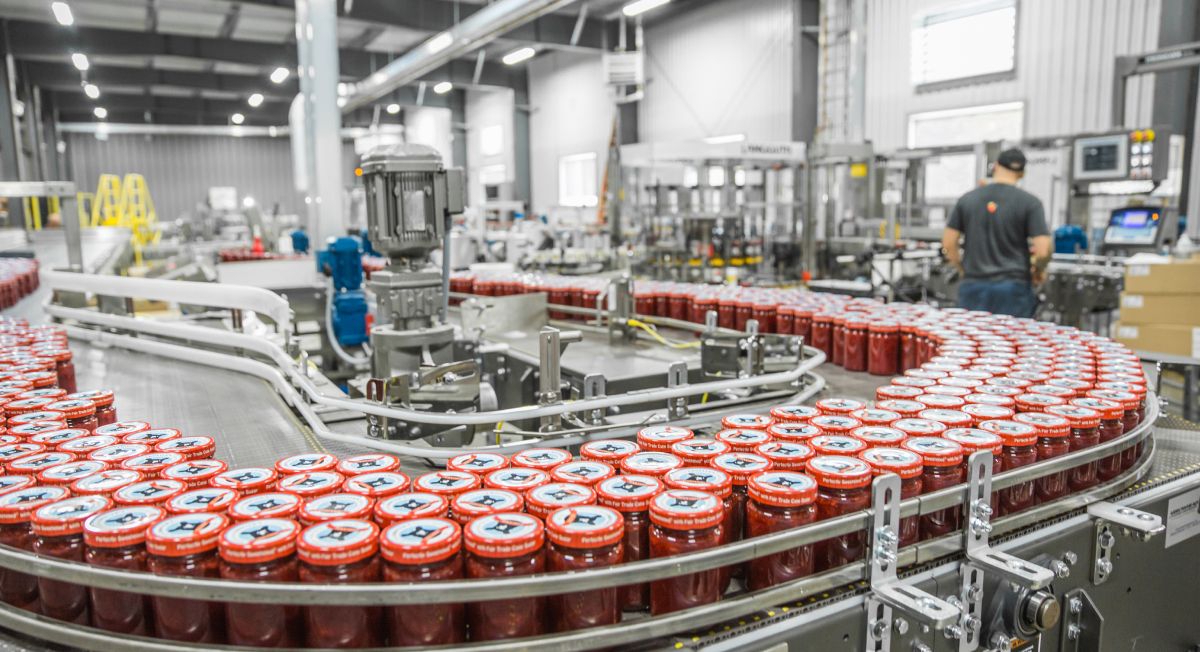
Everyone buys. Almost nobody thinks about the category.
FMCG is built on scale.
More people. More occasions. More shelves. More baskets. More repeat.
But scale creates a strange problem: the bigger the category gets, the harder it becomes to be noticed inside it.
Consumers have endless choice, limited attention and very little reason to think about your brand until the moment they need it.
So the job isn’t simply to make people aware.
It’s to become the brand they remember, choose and come back to.

THE FMCG PARADOX
The category rewards consistency.
Culture rewards change.
You need the distinctive assets that make your brand recognisable, while staying relevant enough to remain part of people’s lives.
You need to protect margin while driving volume.
Build long-term brand equity while delivering this month’s number.
Create work people actually want to engage with while making sure it still moves product.
That’s the tension.
And that’s where marketing gets interesting.

THE SHELF IS ONLY PART OF THE BATTLE
Modern FMCG doesn’t happen at the shelf alone.
Discovery happens in feeds.
Consideration happens in culture.
Recommendation happens in communities.
Purchase happens across physical and digital retail.
Loyalty is built through repeated experiences.
The consumer doesn’t experience these as separate marketing channels.
Why should your marketing organisation?
PARADOX connects the system from strategy through to culture, content, social, growth and community.

WHAT WE LOOK AT
THE BUSINESS
Where does growth actually need to come from?
Penetration. Frequency. Distribution. Portfolio growth. New occasions. New audiences. New products.
We start with the commercial problem, because execution without strategic direction creates activity.
THE CATEGORY
What has the category trained consumers to expect?
Where are competitors converging? Where is everyone saying the same thing? What behaviours are changing? Where is there whitespace?
Category understanding is not the same as category conformity.
THE CONSUMER
Who are you really trying to move?
Not just a demographic segment.
We look at behaviours, occasions, motivations, language, communities and the cultural context surrounding the category.
Because people don’t buy categories.
They buy brands in moments.
THE CULTURE
What is happening outside the category that could change how people think about it?
Our Culture OS isn’t about finding the trend of the week. It’s about finding cultural territory a brand can credibly occupy — territory that is relevant, distinctive, ownable and commercially useful.
THE GROWTH SYSTEM
Brand and performance aren’t opposing forces.
Growth should amplify the brand, not operate separately from it.
That means connecting acquisition, conversion, retention, CRM, media, experimentation and measurement to the bigger marketing system.

ONE SYSTEM. SIX LENSES.
We don’t believe FMCG needs another campaign factory.
It needs a connected marketing capability.
STRATEGY OS
Give the marketing a commercial job.
Brand, portfolio, proposition, pricing, packaging, promotion, distribution and growth strategy — connected to the problem the business actually needs to solve.
CULTURE OS
Find somewhere worth being.
Identify the cultural territories where the brand has permission to participate, differentiate and potentially own.
GROWTH OS
Turn attention into demand.
Connect media, acquisition, conversion, CRM, retention and experimentation to the brand rather than treating performance as a separate machine.
CONTENT OS
Make the strategy tangible.
Build original, modular content designed around the territory, the audience and the platforms it needs to travel through.
SOCIAL OS
Stop treating every platform like a noticeboard.
Culture moves differently on TikTok, Instagram, YouTube and everywhere else. The platform changes the behaviour. The behaviour changes the marketing.
COMMUNITY OS
Move beyond the transaction.
The goal isn’t simply to moderate comments.
It’s to create participation, relationships and reasons for people to keep choosing the brand.

BUILT FOR FMCG. NOT BUILT LIKE FMCG.
We’re not interested in making FMCG marketing more complicated.
We’re interested in making it more connected.
Senior strategic talent.
Cultural intelligence.
Creative capability.
Growth expertise.
Social thinking.
Production.
Community.
Technology and data.
One operating system. One integrated team. One commercial direction.
That’s the advantage of Marketing-as-a-Service: you get the capability of a sophisticated marketing organisation without having to build every capability yourself.

THE FMCG QUESTION
Everyone in the category knows how to sell.
The interesting question is:
Who can make people care?
Because the next generation of FMCG brands won’t win by choosing between brand and performance.
They’ll win by making the two work harder together.
Commercially sharp. Culturally alive.
That’s FMCG, the PARADOX way.
You run the business. We run the marketing.