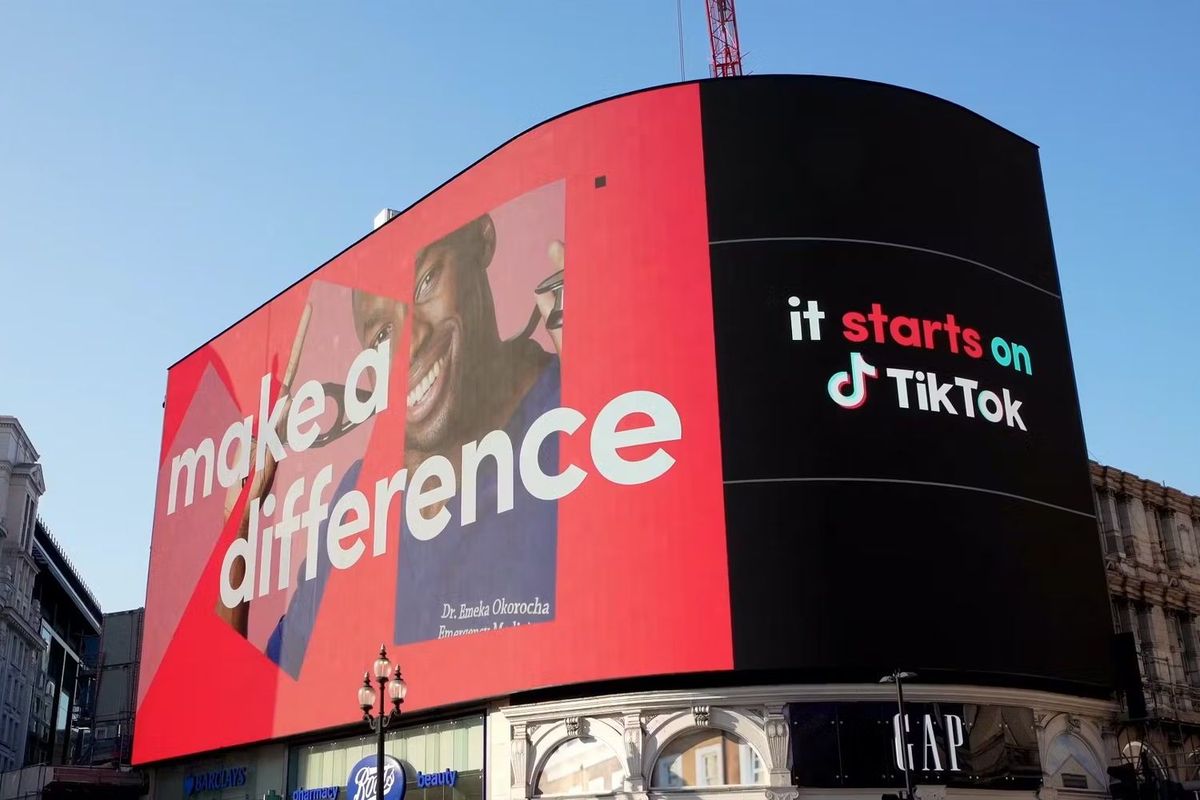
Social isn’t a channel. It’s where culture moves.
People don’t experience social media as a collection of brand pages.
They discover things.
Follow people.
Join conversations.
Search.
Share.
Argue.
Laugh.
Buy.
Create.
Every platform has its own culture, behaviour and rules.
Social OS helps brands understand where they belong, how they should show up and what they can make happen there.
Don’t just post on social. Participate in it.

The opportunity
Your audience isn’t waiting for your next post.
They’re already somewhere.
On TikTok, looking for something new.
On YouTube, learning or being entertained.
On Instagram, discovering people, places and products.
On Pinterest, planning what comes next.
In communities, talking about what they care about.
The opportunity isn’t to be everywhere.
It’s to understand where your people are, what they’re doing there and what your brand can contribute.
That means designing for the platform — rather than simply distributing the same content across it.

What this capability does
It makes the brand native to the way people use social.
Social OS connects culture, audience, platform and content.
We start with the cultural territory the brand wants to play in.
Then we ask:
Where does this culture live?
Who participates in it?
How do they behave on each platform?
What formats do they respond to?
What role can the brand credibly play?
From there, we build a social system that includes organic content, paid distribution, creators, communities, search, commerce and conversation.
The result is a social presence that feels less like advertising and more like a brand that belongs there.

What we actually do
We build around how people actually use each platform.
We consider the culture, audience, algorithms, formats, features, discovery mechanics, creators, communities and commercial opportunities of each relevant platform.
Social strategy
Define the role social plays in the broader marketing system.
What are we trying to achieve? Who are we trying to reach? Where should we show up? What should social do that other channels can’t?
Platform strategy
Choose the platforms that make sense for the brand.
TikTok, YouTube, Instagram, Pinterest, X, Facebook, Spotify, Snapchat — and whatever comes next.
Not every brand needs all of them. Just the ones that matter for your brand.
Audience architecture
Understand who is actually on each platform and what they’re there to do.
The same person can behave very differently from one platform to another.
Platform-native content
Adapt ideas to the way each platform works.
The objective isn’t to resize the same piece of content six times.
It’s to make the idea work in the language of the platform.
Social creative
Develop recurring formats, series, concepts and content systems that give people a reason to follow and return.
Creator ecosystems
Identify creators and communities that already have credibility with the audiences that matter.
Then build relationships that are useful and meaningful rather than transactional.
Organic & paid social
Connect organic behaviour and paid distribution.
Use paid media to extend the work, while using organic performance and audience behaviour to inform what gets made next.
Social search & discovery
Think beyond feeds.
People increasingly use social platforms to search, discover products, find places, learn and make decisions.
Social commerce
Where relevant, connect discovery and content with the path to purchase.

How it connects to the Marketing OS
Social is where the system meets people.
Social OS takes the opportunity, territory and creative work from the rest of the Marketing OS and gives it a place to travel.
Strategy OS
Defines the commercial opportunity.
↓
Culture OS
Finds the cultural territory.
↓
Content OS
Turns the territory into ideas and original work.
↓
Social OS
Determines how those ideas live and travel across platforms.
↓
Growth OS
Distributes, tests and scales what works.
↓
Community OS
Turns audiences into participation and relationships.
Then social behaviour feeds the system again.
Publish → Participate → Learn → Adapt → Publish
Social isn’t the final distribution step.
It’s a live source of cultural and customer intelligence.

Typical outputs
The output is a social system, not a content calendar.
Depending on the opportunity, Social OS can include:
- Social strategy
- Platform strategy
- Audience architecture
- Recurring social formats
- Creator strategy
- Organic social
- Paid social integration
- Social search strategy
- Social commerce
- Social listening
- Social analytics
The objective isn’t to maximise the number of posts.
It’s to build a social presence that earns attention, creates participation and contributes to growth.
The PARADOX Journal
Your audience is already there.
The question is what your brand is going to do about it.
Let’s find your place in social.
You run the business. We run the marketing.