

Money is rational. The decisions people make about it aren’t.
Banking. Insurance. Investing. Payments. Lending. Fintech.
Different products. Same fundamental problem:
You’re asking people to trust you with something deeply personal.
Their money.
Their security.
Their future.
Their family.
Their ambitions.
And yet financial marketing has a habit of making people feel like they’re reading the terms and conditions.
We think there’s a better way.
Make financial products easier to understand. Make the brand easier to trust. Make the value easier to feel.

The Financial Services paradox
Financial decisions are often presented as rational.
But people don’t experience money rationally.
They worry about it.
They avoid thinking about it.
They talk about it with friends.
They compare themselves to others.
They make decisions based on fear, aspiration, habit and trust.
A customer might choose a bank because of fees.
They might stay because their life is there.
They might switch because they no longer feel understood.
The spreadsheet explains the product. It doesn’t explain the relationship.

Trust is the product before the product
Financial services has a particularly high bar for marketing.
You can’t simply create attention.
You need credibility.
You need clarity.
You need relevance.
And increasingly, you need to make financial products feel like they belong in the lives people actually live.
That means moving beyond generic promises of trust, security and convenience.
Everyone says those things.
The real question is:
What makes your brand believable?

What we look at
THE BUSINESS
Where does profitable growth need to come from?
- Acquisition.
- Product penetration.
- Cross-sell.
- Retention.
- Share of wallet.
- Customer lifetime value.
We connect marketing activity to the commercial model, not just campaign metrics.
Because financial marketing has to make financial sense.
THE PRODUCT
Financial products can be complex.
- Interest rates.
- Fees.
- Rewards.
- Risk.
- Terms and conditions.
- Benefits.
- Eligibility.
Our job isn’t to hide the complexity.
It’s to translate it.
Complexity should be understood before it is sold.
THE CUSTOMER
People are not just account holders, policyholders or policy numbers.
They’re students.
Parents.
Entrepreneurs.
Homeowners.
Travellers.
First-time investors.
People trying to get through the month.
Their financial behaviour changes as their lives change.
Good financial marketing starts with the person, not the product.
THE CULTURE
Money has a culture of its own.
How people talk about wealth.
How they think about debt.
What they believe about investing.
How families discuss money.
What financial success looks like.
Who they trust for advice.
These beliefs shape behaviour long before someone sees an advert.
Culture influences financial behaviour. Marketing needs to understand both.
THE REGULATORY REALITY
Financial services operates within a highly regulated environment.
That doesn’t mean the marketing needs to sound regulated.
We build within the constraints while looking for the space between compliance and communication — where information can still be clear, human and culturally relevant.
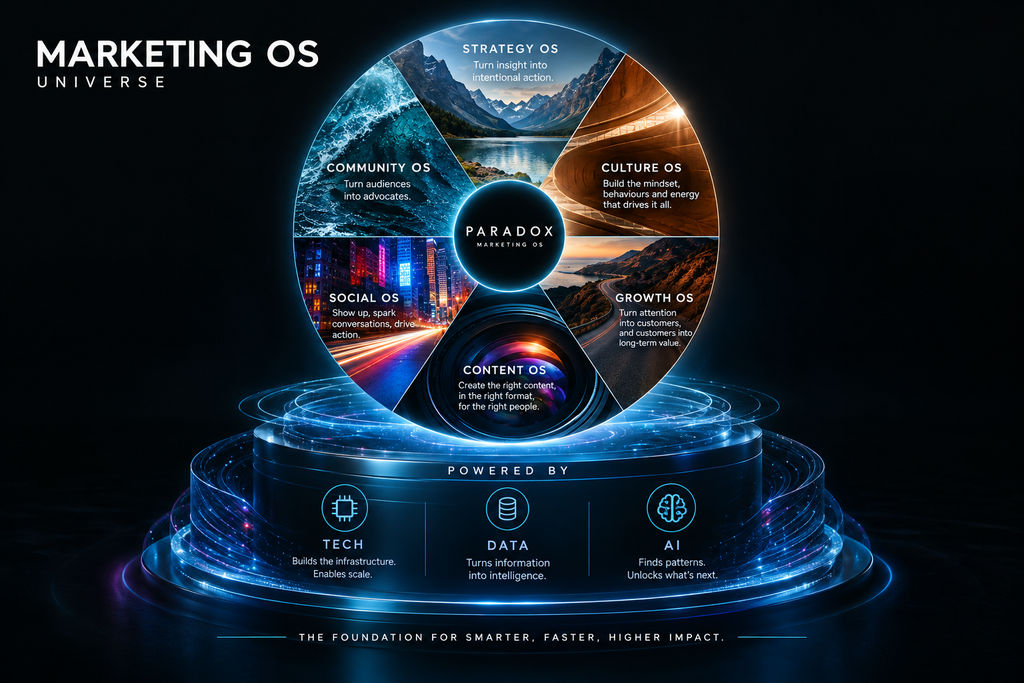
ONE MARKETING OS. BUILT AROUND TRUST.
STRATEGY OS
Give marketing a commercial job.
Positioning. Messaging. Customer strategy. Product architecture. Acquisition. Retention. Cross-sell. Share of wallet.
Start with the business problem.
CULTURE OS
Understand how people actually think about money.
Identify behaviours, beliefs, communities and cultural territories that create relevance without compromising trust.
GROWTH OS
Connect acquisition to lifetime value.
Lead generation. Conversion. Onboarding. CRM. Monetisation. Cross-sell. Retention. Reactivation.
Optimise the customer relationship, not just the first transaction.
CONTENT OS
Make the complicated clear.
Financial education. Product storytelling. Customer stories. Explainers. Social content. Thought leadership.
Useful first.
Interesting second.
Boring never.
SOCIAL OS
Meet people where financial conversations already happen.
Social isn’t just another distribution channel.
It’s where people ask questions, compare experiences, seek recommendations, make complaints and increasingly form opinions about financial brands.
COMMUNITY OS
Turn trust into relationships.
Customers, advocates, communities, creators and experts can become part of a broader trust ecosystem.
Not just an audience list from your CRM.
A network of people who have a reason to believe in the brand.

Human enough to trust. Smart enough to matter.
We can talk about CAC.
But we also want to understand the customer’s financial anxiety.
We can analyse conversion.
But we also want to know what makes someone hesitate before handing over their money.
We can build a CRM journey.
But we also want the message to arrive at a moment when it actually means something.
Because financial services sits at an unusual intersection: highly rational products, deeply emotional decisions.
That’s exactly where commercial intelligence and cultural intelligence need to work together.

Built for Financial Services, not built like Financial Services.
You don’t need more financial marketing that sounds like financial marketing.
You need a brand people can understand.
A proposition they can believe.
A growth system that makes commercial sense.
And a cultural point of view that makes the brand feel like it belongs in people’s lives. Rooted in:
- Strategy.
- Culture.
- Growth.
- Content.
- Social.
- Community.
- Data.
- Technology.
One integrated team. One Marketing OS. One commercial direction.

The Financial Services question
Everyone can tell people that their money is safe.
The harder question is:
Why should people trust you with it?
Because in financial services, attention is valuable.
Trust is everything.
That’s Financial Services, the PARADOX way.
You run the business. We run the marketing.